
Biology · Genetics · Molecular Biology
DNA & RNA Assembly Kit
Learn DNA and RNA by building them
A tactile classroom kit that turns genetics into action. Students build strands, practice base pairing, and model transcription and translation with colour-coded, reusable parts and teacher-ready guides.
See current price on Etsy
Orders are fulfilled through our Etsy storefront.
- Activity length
- 15–45 minutes
- Works well for
- 2–4 students per kit
- Designed to support
- NGSS HS-LS1-1
Who it's for
- Biology teachers seeking fast, tactile activities (15–45 minutes)
- STEM clubs and enrichment programs
- Homeschool families (ages 10+, small parts)
Why it works
Students learn faster when they can build, test, and explain. The kit makes invisible steps visible, so concepts move from notes to memory.
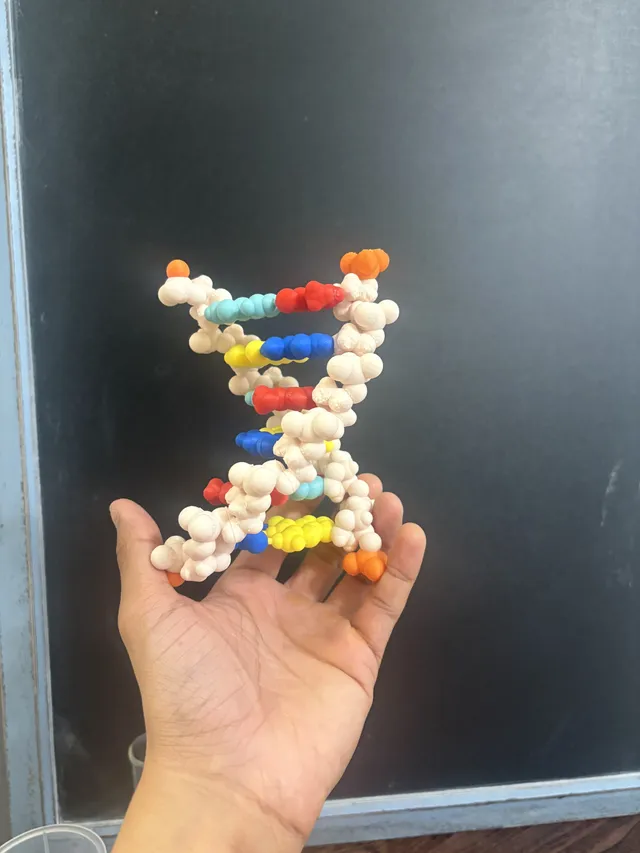
- • Color coding and shape cues guide correct pairing
- • Directional pieces show strand polarity
- • Codon grouping maps directly to a translation chart
- • Quick resets support multiple classes a day
What the kit teaches
Included learning
3 sequenced lessons ship with this kit, each with learning goals, a guided activity, practice exercises, and reflection questions. Materials are delivered with your order.
-
DNA to RNA (Transcription)
Students build a six-base DNA coding strand with the kit, then transcribe it into RNA by replacing thymine with uracil and leaving adenine, cytosine, and guanine unchanged.
Learning outcomes
- Describe the role of DNA and RNA in the flow of genetic information.
- Identify the differences between DNA and RNA nucleotides.
- Accurately transcribe a short DNA coding strand into RNA using base-pairing rules.
- Explain why transcription is the first step in building proteins.
-
RNA to Amino Acids (Translation)
Students divide a six-base RNA sequence into two codons and read each one against the codon chart, building a two-amino-acid chain and meeting the start and stop codons.
Learning outcomes
- Divide an RNA sequence into codons (groups of three bases).
- Use a codon chart to determine which amino acids correspond to each codon.
- Explain the role of the start codon (AUG) and stop codons in translation.
- Understand how proteins are built one amino acid at a time.
-
Mutations and Their Effects
Students change one or two bases in a sequence from the earlier lessons, re-transcribe and re-translate it, and classify the result as a silent, missense, or nonsense mutation.
Learning outcomes
- Define what a mutation is.
- Model different types of mutations using DNA and RNA.
- Classify mutations as silent, missense, or nonsense.
- Explain how even a single base change can affect proteins.
In the classroom
Teacher integration
Every lesson follows the same structure: learning goals, a background explanation, a guided step-by-step activity, practice exercises, and reflection questions. The sequence builds deliberately — the mutations lesson reuses the sequences students already transcribed and translated, so each activity reinforces the last.
From introductory genetics to AP Biology
Colour coded parts and durable, recyclable PLA make the system work across course levels, from a first genetics unit to AP Biology review. Students do not just read about DNA to RNA to protein, they build it.
What's in the box
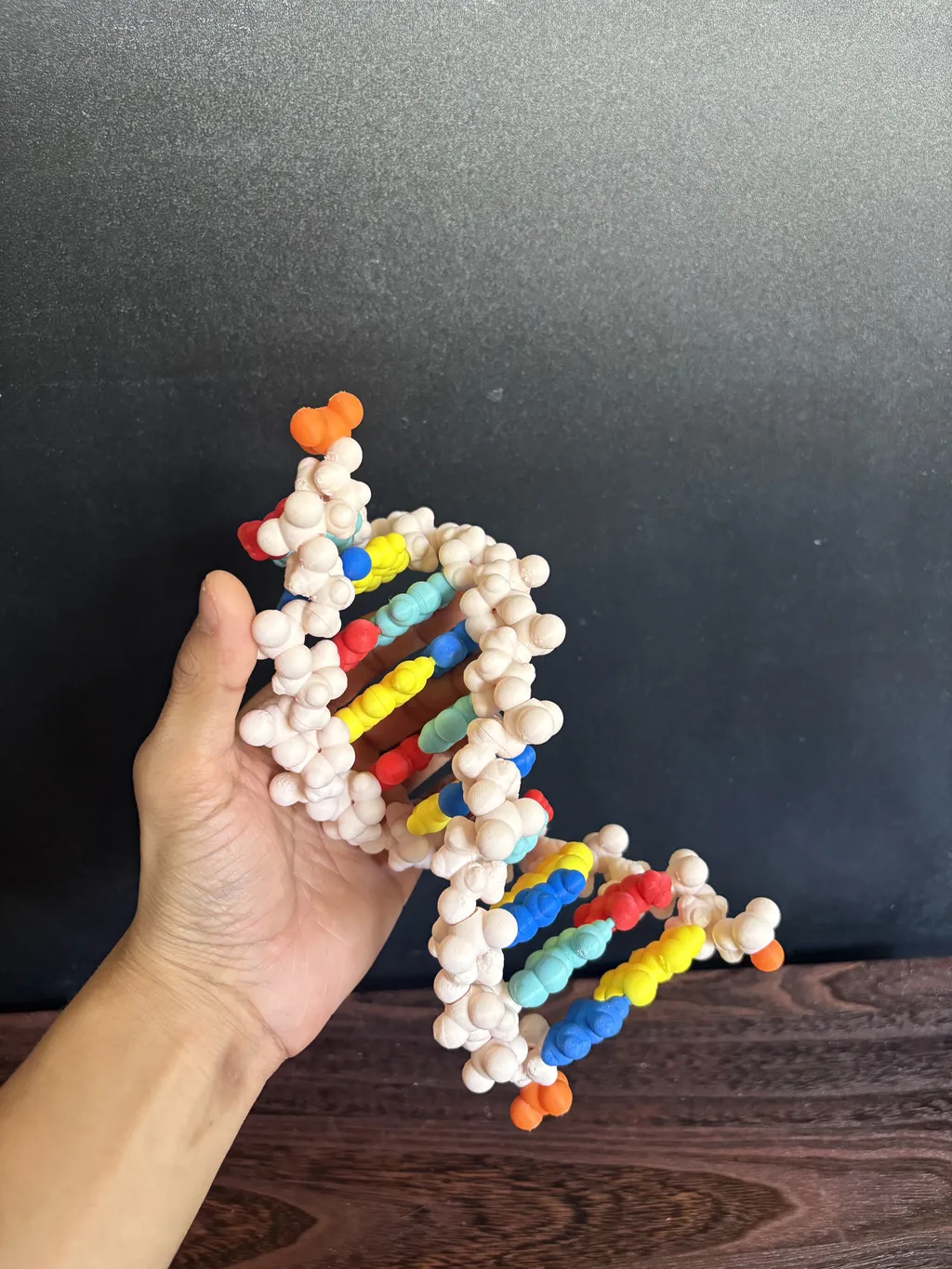
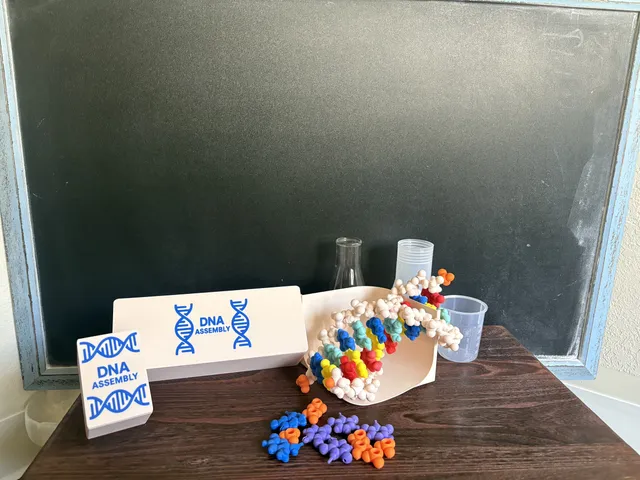
- Colour-coded nucleotide bases: adenine, thymine, uracil, cytosine, guanine, and 5-methylcytosine
- Beige sugar-phosphate backbone pieces with orange phosphate units
- Mini codon chart card covering 20 amino acids and the three stop codons
- Three printable lessons with guided activities, practice exercises, and reflection questions
- Molecular genetics overview guide and a classroom presentation
Materials and care
- 3D-printed in durable, recyclable PLA
- Colours chosen for clarity and contrast
- Wipe clean with mild soap and water
Learning outcomes
- Explain base pairing rules and strand polarity, including 5′ to 3′ direction.
- Transcribe a DNA coding strand into RNA and explain why uracil replaces thymine.
- Divide RNA into codons and translate them into amino acids using a codon chart.
- Classify point mutations as silent, missense, or nonsense and explain their effect on a protein.
- Describe how DNA methylation can change gene expression without altering base pairing.
Common questions
Does the kit support RNA activities?
Yes. Uracil pieces are included for A–U pairing and single-strand activities.
Is there a teachers’ guide?
Yes. Downloadable lesson plans, worksheets, and answer guides are included.
What age range is this for?
Recommended for ages 10+ (small parts). Perfect for middle to high-school biology.
Reviews and pilots
Recognition
Venture Devils
ASU Edson E+I seed funding
Completed pilots
8 classrooms
'25–'26, Phoenix, AZ
Etsy reviews
★★★★★
From early classroom orders
Bring DNA & RNA Assembly Kit to your classroom
Order a single kit, or talk to us about classroom bundles and pilots.